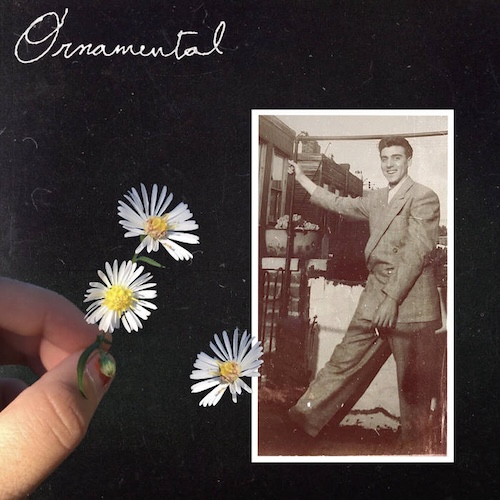
(All artwork and photograhy by Lucia Gardiner)
Deep within New Jersey’s Pine Barrens, there is an enchanting, ethereal sound stirring softly in overgrown cemeteries, cedar forests and DIY home recording studios. Since 2020, Ornamental, a Southern Jersey elemental folk project, has been creating some of the most spellbinding and rustically dreamy songs this side of Sibylle Baier and Mossy Kilcher.
Ornamental is the brainchild of songwriter and visual artist, Lucia Gardiner, who sings, plays guitar and synths, and also stitches together collages from field recordings and snippets of found sounds. With striking melodies, frosty autumn morning vocals and atmospheres that can be at once both soothing and haunting, Gardiner’s music feels like the ghost of a memory or an echo of a past era drifting through an abandoned landscape.
Inspired by the likes of Adrianne Lenker, Grouper and the 70’s British folk revivalists, Gardiner’s poetic lyrics are enigmatically expressive and deeply personal. Passionate longing, sorrow and the mystical and mythical qualities of the nature of her Pineys home all come through in her serene music. This is environmental folk that speaks to the very core of your heart.
When I first heard Gardiner’s songs, I was immediately struck by their melancholic beauty and dreamlike ambiance, complete with birds, crickets and wind singing delicately in the background. I became a fan right away. So I absolutely needed to share Gardiner’s music here, and interview her about Ornamental, her creative process and how her surroundings play such an integral role in her sound. I also of course had to book the band for our next garden party concert on June 28th (more about that soon!) Check out our recent conversation:
(This interview was edited for length and clarity.)
What was in your musical upbringing? How long have you been playing; was your family musical or music lovers; what music made you want to start writing your own songs, etc?
LG: I feel like this is in some ways very New Jersey and some ways not. I went to Catholic school growing up. I don’t really consider myself religious, but with that upbringing, I grew up in choir. I didn’t grow up playing instruments, but I was always in choir. I was a really shy kid, but I really liked to sing. I attribute a lot of what I know about singing to that. I had this choir teacher who was just really patient with us, and I felt like she really taught me a lot about how to control my voice. I didn’t really pay attention to it then. As I started to want to make music and try to be in a band, I found myself paying much more attention to that sort of thing. That kind of stuff sticks with you, even if you don’t pay attention to it in the moment.
I remember the first time I went over someone’s house to hang out as a kid and I was so excited. I was like, oh my God, I’m finally going to a sleepover and I’m gonna hang out with people, and then their house was completely silent.
I thought that was the craziest thing because growing up, every second my parents had some record or CD on. So I do think that says a lot. My parents aren’t musicians, but they definitely were always playing music in the house. It was very loud growing up, not necessarily in a bad way, but they just needed something on.
My parents were big Talking Heads and Neil Young fans. Neil Young is one of my favorites, one of my big influences. My mom would get hyper fixated on certain albums, by people like Lucinda Williams, for example. She has this recording of Gravel Road, from something like an WXPN broadcast of the whole album. My mom was obsessed with it for one summer, and that’s just one of those things that sticks out in my mind that she would just play every time we got in the car. So that’s definitely an aspect of my musical upbringing.
What led you to start Ornamental in 2020, and the overall Ornamental aesthetic?
LG: In 2018, I had been playing in a duo, and it was so eye-opening for me, because it was the first time I was playing music with someone. It was stripped-down folky stuff. Then, after that duo ended, I had a lot of this anger about music and anger about that dynamic with music that by the time I was ready to start the Ornamental moniker (even though Ornamental can just be myself and sometimes other people play with me). I sort of at that time wanted to step away from folk music a little bit, even though I would say Heirloom, which is my debut album, has some folk elements. I wanted to intuitively go with whatever I really felt at that time and prove myself as a musician, prove that I could work with other people and prove that I could do something. Just my vision alone, even though other people were playing on it. That was something that felt like it was completely me at that time. That’s what I wanted to do.
I remember sitting in a friend’s bedroom and I was reading some book that was given away for free by my college library. I was looking through one of these books and I saw the word “ornamental,” and I was like, that’s it!
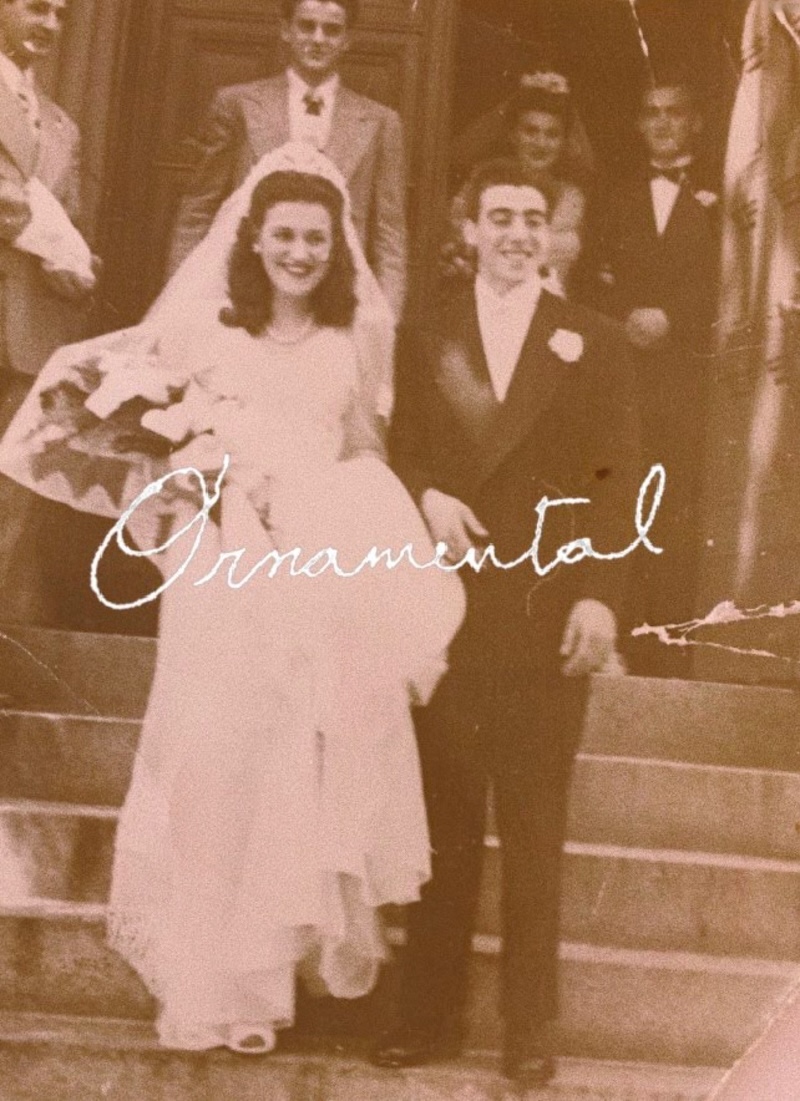
From there, I recorded a single with another close friend of mine, Jarrett Wenzel, who helped me record that single and played drums on that first album. At that time, during college, I felt like there was sort of this expectation that playing music and making music meant that you had to always play shows and you had to play in college basements, and you sort of had to be a symbol visually as the whole band yourself.
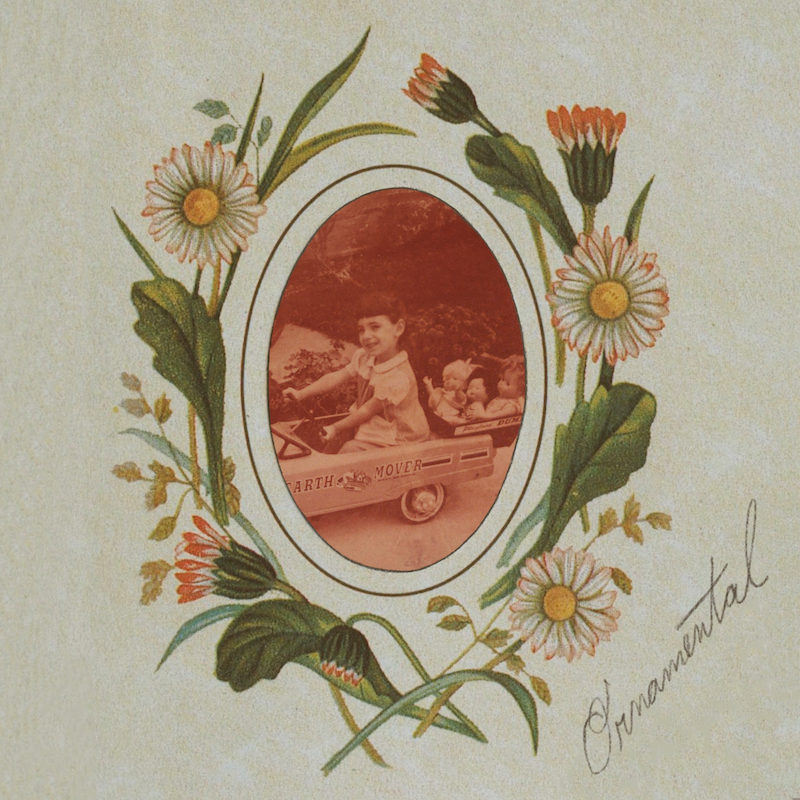
At the time when we were first starting out and we were getting in the studio and stuff, I wanted to create an image for Ornamental without focusing on my face. Even though my face is out there, I kind of liked the idea of just the music [speaking for itself] and having these symbols that I felt were really a part of myself. Recurring imagery, like daisies, are very big with Ornamental. I’m really into folklore and plants and tree symbolism. One of my favorite movies is The Secret Garden. There are all these different little things from my life that don’t have to do with music that I try to incorporate in this Ornamental energy. <laugh>
What sort of influences, both musical and non-musical, do you feel might have inspired the sound and feeling of Ornamental’s music?
LG: Musically, Neil Young, Nick Drake, Bridget St. John, the icon. She’s amazing. A lot of sixties folk revival stuff and some of the sixties folk revival that now is getting attention after being a little more under the radar. I’m really big into poetry. Pablo Neruda is a big influence on me. He’s such a romantic poet. Dorothy Parker, people like that. I feel like when I write, it is very much imagery based, at least in my head.
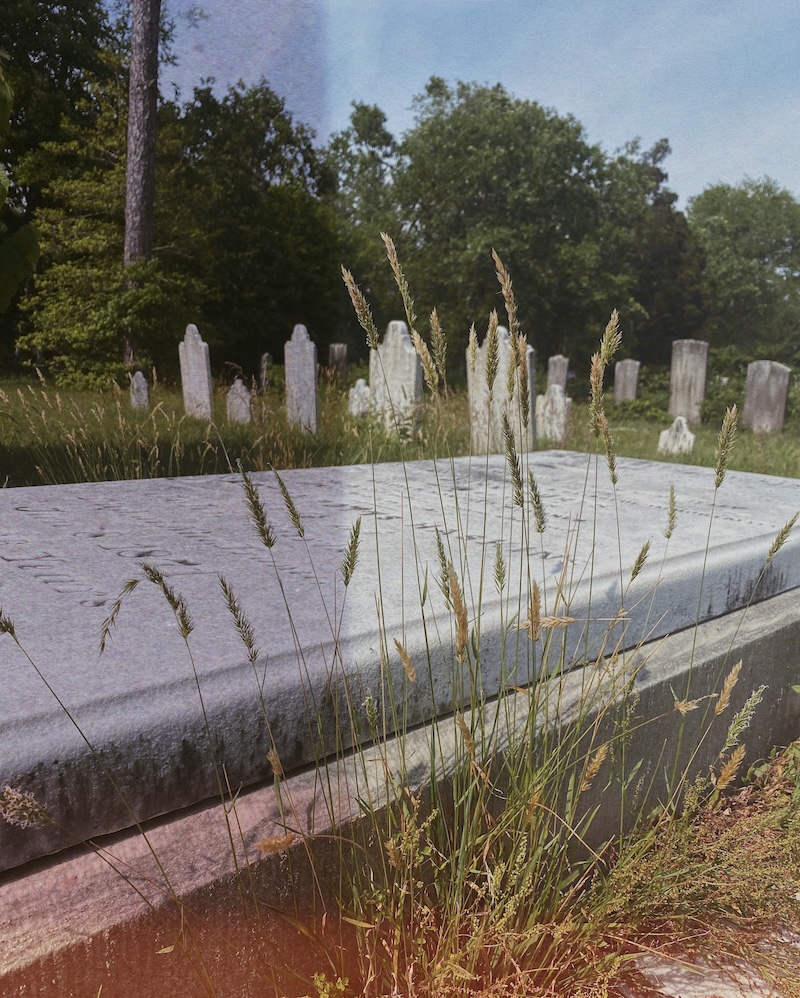
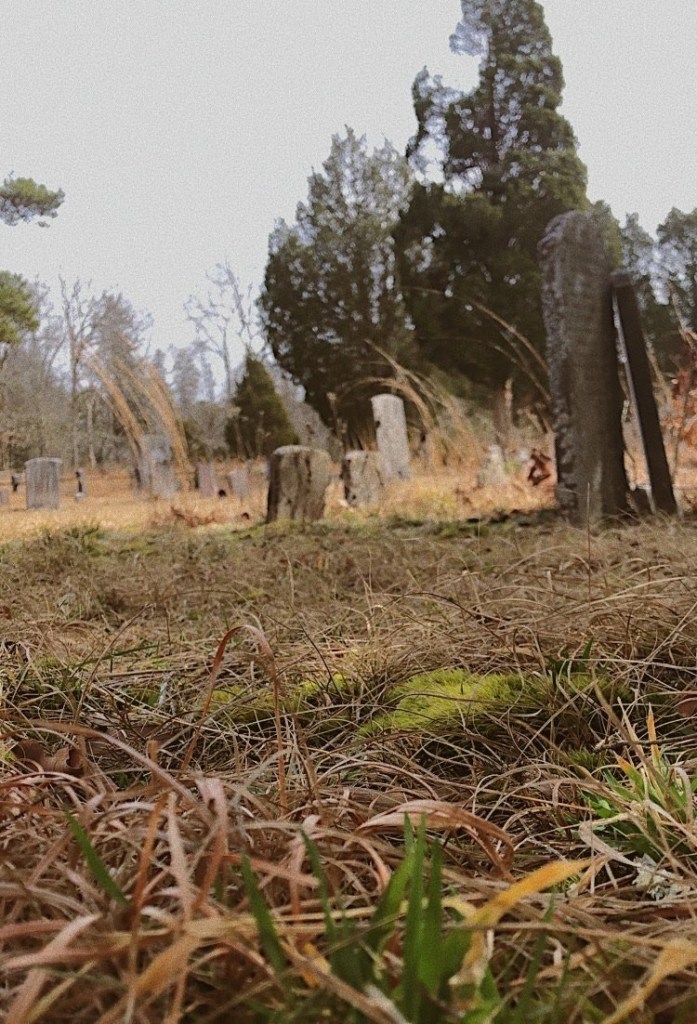
A lot of the songs on Graveyard Demos were written in my local graveyard, that’s a big part of the Ornamental brand as well. I live in the Pine Barrens, and I ride my bike on this little commute to my local graveyard, Pleasant Mill Cemetery. I’ve been doing that since before I could play music, and it’s always been like a symbol for Ornamental. So when I was working on these new songs over the last two or three years, I would ride my bike and just go lay in the graveyard and write some songs or listen to some music.
Do you know what Cedar Water is? [Editor’s note: cedar water is a fresh body of water found in cedar forests or swamps that is stained brownish-red by the tannins and iron that are released from the roots and soil. It’s particularly common in New Jersey’s Pine Barrens]. You get all surrounded by Cedar Water back there. I just go swimming and hang out. That’s a big inspiration for the music too, because that’s in my head. That’s where this setting is. Much of what I’m writing, even though it’s usually about past relationships or the ideas of relationships and dynamics that I could have with people or have had with people, there’s also this element of the dreamscape. The dreamscape in my head is always something overgrown. It’s the idea of something old.
Did you always live in New Jersey, and is there any sort of music community that you feel or have ever felt a part of?
LG: So I’ve always lived in New Jersey. My parents grew up in New Jersey. Their family was from Philadelphia. So I do have a connection to Philly, but Southern Jersey is always where I’ve been. Music scene-wise, I’m very part of a Philly scene, but I’m on the outskirts. I’m more a part of the Atlantic City music scene. One of the big people-like bands when I was in college that encouraged me to keep doing what I was doing was Molly Ringworm. I wouldn’t say she’s a close friend, but she’s a friend of mine. She’s in my circles. She’s incredible. She’s an incredible songwriter. I just saw her, she was doing like a Cranberry’s cover set.
We always go to Anchor Rock Club. Shout out to Anchor Rock Club in Atlantic City, because I’ve played a few shows there, and they’ve always been really supportive of my stuff and done a lot for the music scene here. There isn’t like some big city down here, like Philly, or even like Jersey City or something like that. There are these little pockets of music scenes that happen at basement shows.
Even though I don’t play out too much, I just love going to local shows and seeing other people do what they do. I’m always trying to push to do an outdoor show.
The sound and lyrics of your music are so evocative and conjure many vivid atmospheres, images and scenes. So I was wondering if the vibe of your songs is ever the starting point in your songwriting process? Could you describe what your songwriting process is like?
LG: That’s a great question. I’m all over the place. I have this little poetry book that I’ve been carrying around for two years. I was one of those kids that always wanted to have a diary that I wrote in every day, but I could not keep up with it. I guess about two years ago after the end of a relationship, I was like if I can’t keep up with a journal and actively write paragraphs, at least I can try to write a poem every day. Even though I’ve sort of fallen off the past few months, I really did write every day in this. A lot of stuff for Graveyard Demos had to do with this poetry book.
I feel like it was really inspiring to have this because it’s helped me feel like I can continue to be creative even when I’m not doing something as compacted as writing a song, where I can have this and have these ideas rolling around. A lot of it’s just imagery, and that really connects with my songwriting. So I think that has been a big influence on my writing in the last few years. Having this to look back to and think of and really roll over these same images in my head over again to create the environment that I want in a song.
I write a lot of my songs more recently in non-standard tuning, like it’s mostly open D or Drop D or different tunings that have to do with that. I feel like there’s something about that deeper range that creates the environment that I want. I used to write lyrics first and then put them onto music, but since Covid, I really got more into just playing guitar and trying out these different tunings that feel more atmospheric and connective to nature. That has made me work the opposite where I might write a piece of a guitar part and add onto it.
What was it like recording your first album? Was it done in a studio or was it more of a DIY recording?
LG: Both. It was not really a studio, but my drummer at the time, Jarrett Wenzel, he’s incredible and he has music experience in totally different genres than Ornamental. At the time he was like, ‘look I got all this recording equipment. I set up this studio in my basement. I have a lot of nice equipment, and I’m really just starting out with this, do you wanna give me a chance? Let’s try to do this.’ I was like, ‘yeah, totally. This is awesome.’ So his basement was really where that was recorded, but it was a studio environment-ish.
I feel like where I’m at now with trying to record music, I struggle sometimes with the idea of recording in a studio or recording in a more boxed-in space because I like negative space in songs. I like the atmosphere of a song, even if you don’t hear birds chirping or whatever. Sometimes, especially with the music that I want to create, I feel like a studio almost deadens the sound and I want it to be more of an experience. I don’t want it to be like a product. I sort of struggle with that. It’s weird because part of me is self-conscious about it. I’ve had some people be like, ‘you just have to go to the studio and record this. This is just a demo.’ I get that, but also, this is how I want it to sound. I’m no sound technician. I know maybe for some people, when they hear some of the wind, like in Graveyard Demos, there are totally moments where the wind picks up and some people aren’t into that.
I really enjoy the sound collage elements in your music, especially on Some Things from Home, which is essentially a collage record. What attracts you to sound collage and field recordings?
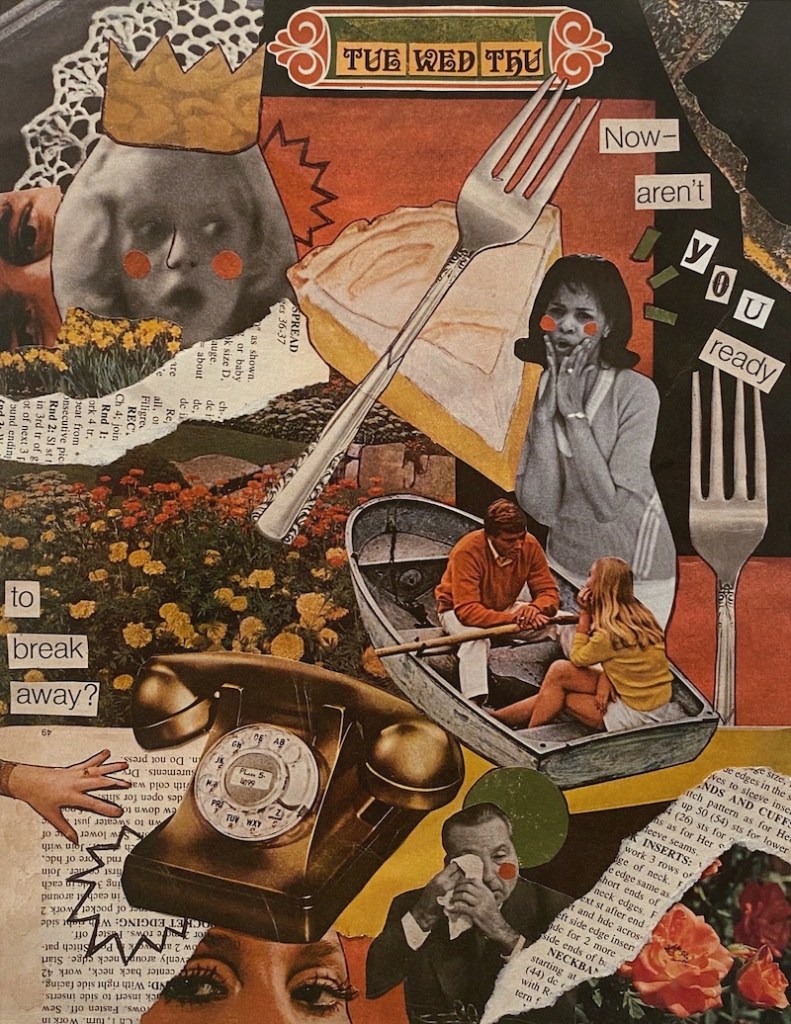
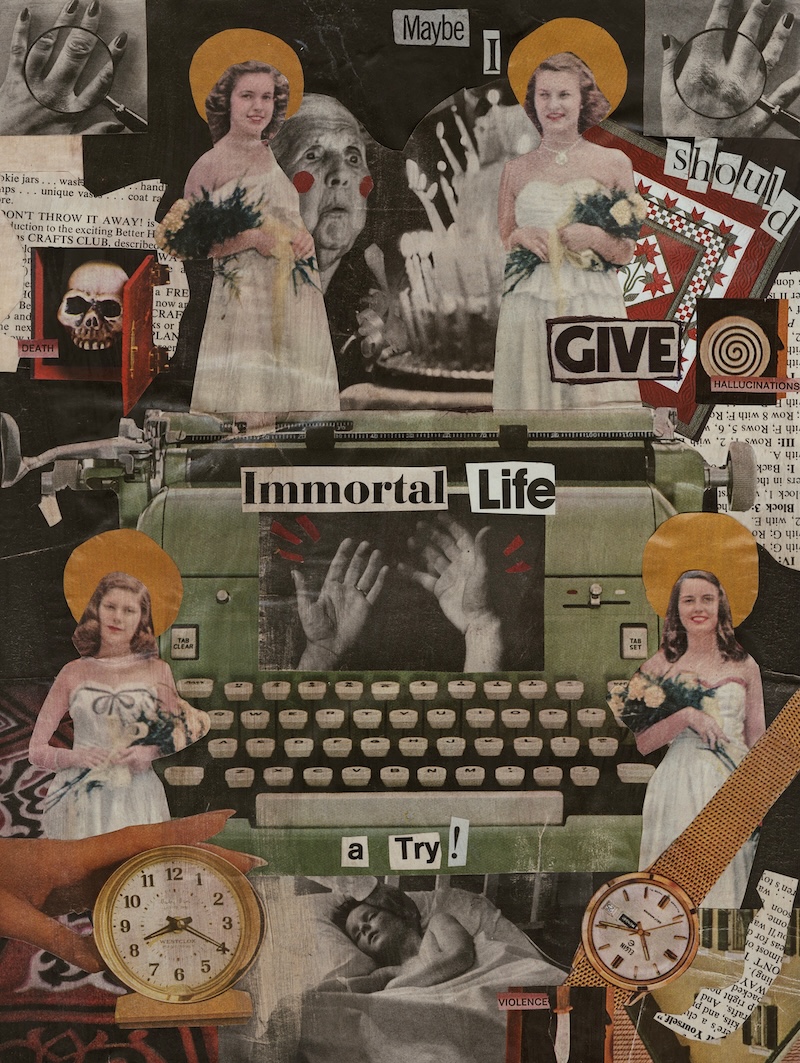
LG: With field recording, like I said, I’m just always outside and I like the environmental sounds and music stuff, and just being in a space and really seeping into that. As for sound collage, I’m a visual artist. I went to school for visual art. Primarily, I’m a printmaker and a collage artist, so I’m always collecting materials. I just have this thing where with physical media, music, art, I’m just like, wow, I need to buy this. I don’t know what I’m gonna do with it, but I need to buy it. So, growing up, I always did physical collages, like cutting from magazines. I’m just interested in recontextualizing things in general. I love the act of collaging. The reason I’m drawn to stuff like that both musically and visually, is because of art movements, like the Dada movement, which was a lot of political stuff. Even though my work’s not really political, I like the power of being able to take an image and make it into something else.
Your latest release, Graveyard Demos, is of course recorded in a cemetery, and the ambience of your setting is partly what makes the release so good. What led you to want to record there?
LG: I feel like as a kid, I was always really connected with cemeteries, but not in a spooky and scary kind of way, more just like there’s something really interesting about them. I think it does go back to me being really into the 1993 Secret Garden movie, even though there are no cemeteries in it. There’s something about a thing that’s overgrown and needs love that connects me to them.
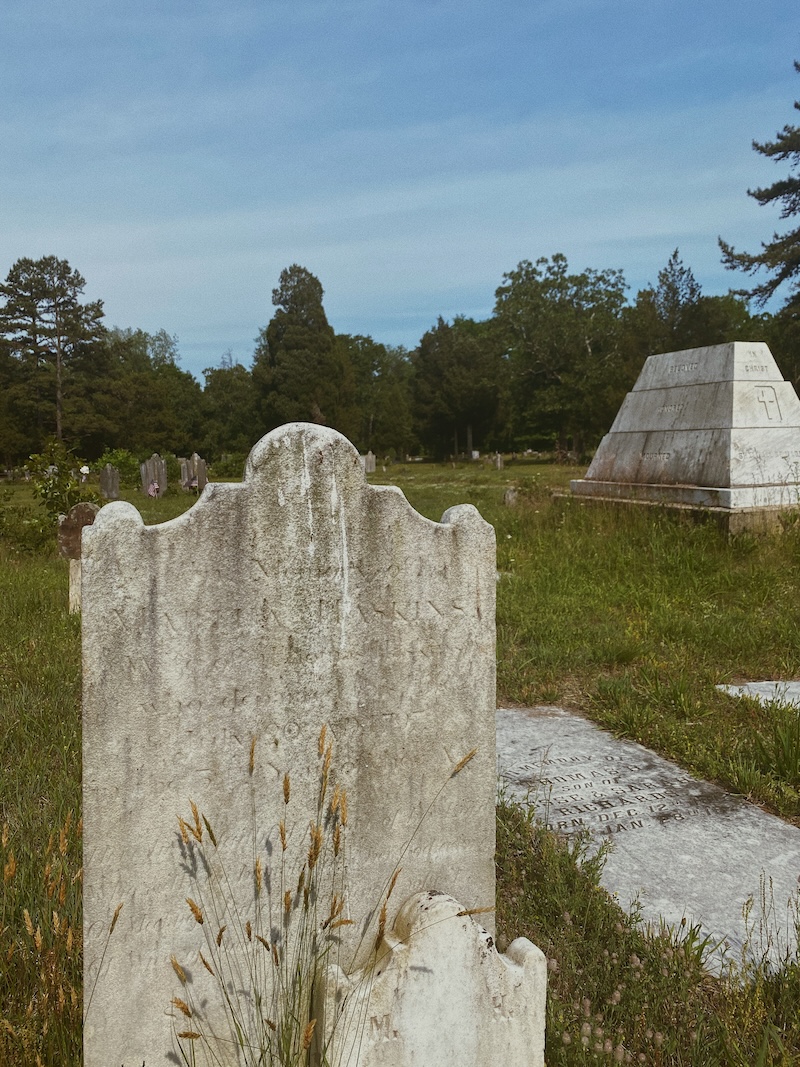
I used to be really, really close with my younger cousin growing up. She lives like a house over. I grew up sort of taking care of her and she’s almost like my younger sister. When I first really started hanging out at the cemetery, it was me and her. We were both learning guitar at the same time, and we would just lay in the grass. We would go there at night, we would lay in the grass and light candles and play music. It was like this place was ritualistic, but it was also just this safe haven for us.
You also made an incredible Bridget St. John cover, and had mentioned before that you’re a huge fan of her work. I was wondering how you were introduced to her music and how it relates to your own?
LG: Have you been to Princeton Record Exchange?
Oh my God. I love it so much, but my wallet doesn’t. It’s one of my favorite stores ever.
LG: I went to school in the Trenton area, so I was 15 minutes away from there. Being able to go there anytime I wanted, like you said, my wallet didn’t like it, but it’s one of the greatest record stores I’ve been to. The people there are so knowledgeable. I remember going there and looking for a Vashti Bunyan record and being like, I know like they’re hard to find, but do you have any, or have any suggestions of where I could get one? They were like, ‘no, I really can’t help you.’ Then, we got into this conversation and they mentioned Bridget, and I was like, ‘I’ve never heard of this person. I’m gonna have to check her out.’ It was a while before I actually listened to her. I don’t know if it came up on Shuffle or if I was out and I heard it, like some divine intervention happened. A song from Ask Me No Questions, I don’t know which one it was, and I was just enthralled. I was like, what the heck is this? Once I saw who it was, I was suddenly transported back to Princeton Record Exchange.
What I love about her is that she is so talented guitar-wise and musically. She gives this ethereal-like mysterious energy, yet she’s also super silly. Like, she’s just talking about her bare feet and, she’s just like, ‘I don’t care.’ I love that. It’s like in my personal life, I’m just a very giggly person. Laughing is the best thing that I could ever do. So having someone who’s encapsulated all of that all at once, like she has it all, is just perfect.
What’s next for Ornamental or anything else that you’re working on?
LG: I have all these songs that I wrote like four years ago, and I was working on them in this different space of my newer drummer’s space in another home studio kind of thing. At first we were really on it and we were doing stuff that I wanted. It was really late summer here in New Jersey, where you can hear all the tree frogs. So you can hear the tree frogs and there’s like a dog barking, so I was like, open the window. So we have all this stuff going on in the background of our recording, and it’s really cool. So there’s all this stuff that we were working on for a while, and then life kind of happened and it just got away from me.
I’m trying to play some shows. Solo mostly. I’ve been trying to reach out to some people. I would just like to play some of these Graveyard Demo songs. In late April, we’re trying to get everyone together to condense and edit some of the stuff that we worked on. So we can put out like two singles. They’re still very folky and twangy, but they are full band.
Thank you so much Lucia for taking the time to chat and nerd out over music and cemeteries with me. Please check out Ornamental’s music on Bandcamp and to follow the band’s Instagram page. You can find more of Lucia’s visual art here, and follow her art IG page here.
-KH

 Record Crates United